
Once rare in our area, we now celebrate regular sightings of the Eastern Bluebird (Sialia sialis), thanks in part to our NBTC volunteer’s efforts. Back in April 1984, rapidly declining populations (by as much as 90% in areas), led The Committee on the Status of Endangered Species in Canada (COSEWIC) to designate this bird a species of special concern.
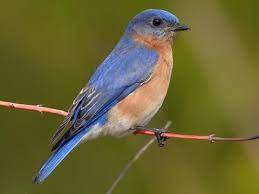
Thankfully the population has increased substantially in the past decades in large part as a result of a successful nest box program, such as the one we are involved. There are currently no significant threats to the species. The status was re-examined and designated Not At Risk in April 1996. Now, even in winter months, we regularly see them on the Niagara Bruce Trail, particularly in Short Hills Provincial Park.
Bluebirds play an important primary ecosystem role by keeping insect species in balance. Did you know they eat adult and larvae Gypsy Moths? Gypsy moths are a concern because the larvae feed voraciously, mostly on the leaves of deciduous trees, but also on some conifers. During the larval stage, a single gypsy moth caterpillar can eat an average of one square metre of leaves.
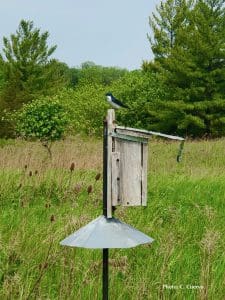
Today the main threats to the Eastern Bluebird population are habitat destruction and competition with aggressive non-native species such as House Sparrows and European Starlings. Eastern Bluebirds are cavity nesters, meaning they nest in holes in trees created by primary cavity dwellers such as Woodpeckers. We can help Bluebirds by putting up nest boxes and monitoring them to ensure they are not taken over by aggressive House Sparrows or encounter other potentially preventable issues.
In the 1990s, Mr. Felix Ventresca proposed a Bluebird Box Program to the Friends of Short Hills Park. Volunteers led by Felix Ventresca, Aurelio Munoz and Bert Murphy built and installed 120 Bluebird Boxes throughout Short Hills Provincial Park and carefully monitored and maintained them for years, most recently led for many years by Margaret Kalogeropoulous, former NBTC President and avid volunteer.
Increasing tick activity at Short Hills, however, deterred volunteers and the birds suffered. Volunteer activities include protecting Bluebirds from House Sparrows, as well as managing ants and wasps who can take over a box, maintaining/replacing the boxes and predator guards. House Wrens can be
deterred by installing a wren guard or by relocating the box out of wren territory. A paired box system was used at Short Hills. An ideal pairing would be Bluebirds in one, Tree Swallows in the other, thus reducing competition.
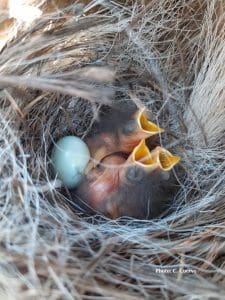
This year the bluebird monitoring program was re-initiated and over 100 successful Tree Swallow fledglings and over 80 Bluebird fledglings were launched! More hatchlings are on the go.
Photos were submitted by Charo Cuervo, NBTC member and Bluebird volunteer. Charo took these pictures while volunteering with bluebird nesting box monitoring.